Learn More With Our

Blog

China Top Muffle Furnace Manufacturers for Global Buyers

Selecting a Muffle Furnace manufacturer involves more than comparing maximum temperatures or advertised prices. Global buyers need equipment that suits their materials, workload, installation space, and service expectations. A compact furnace for routine ash testing may not meet the needs of a production line handling repeated high-temperature cycles. The details matter.

Useful comparisons begin with verifiable specifications: chamber dimensions, rated temperature, heating rate, temperature uniformity, and controller functions. Buyers should also ask how the furnace performs under their actual operating conditions. A stated maximum temperature alone does not explain how steadily a unit holds a setpoint during a long test. Request technical documentation, warranty terms, and clear guidance on installation and maintenance. Small checks help.

This guide introduces leading Muffle Furnace manufacturers and the factors international purchasers can use to assess them. It considers product range, customization, quality controls, export experience, and after-sales support. These factors can help narrow a shortlist, but they do not guarantee a perfect fit. No manufacturer is best for every laboratory, and published product claims deserve independent verification. Ask for relevant test records when available, confirm the exact configuration, and clarify which services are accessible in your region. Even a careful review leaves some uncertainty; real operating needs can differ from a brochure. A measured comparison is more useful than choosing by brand name alone.
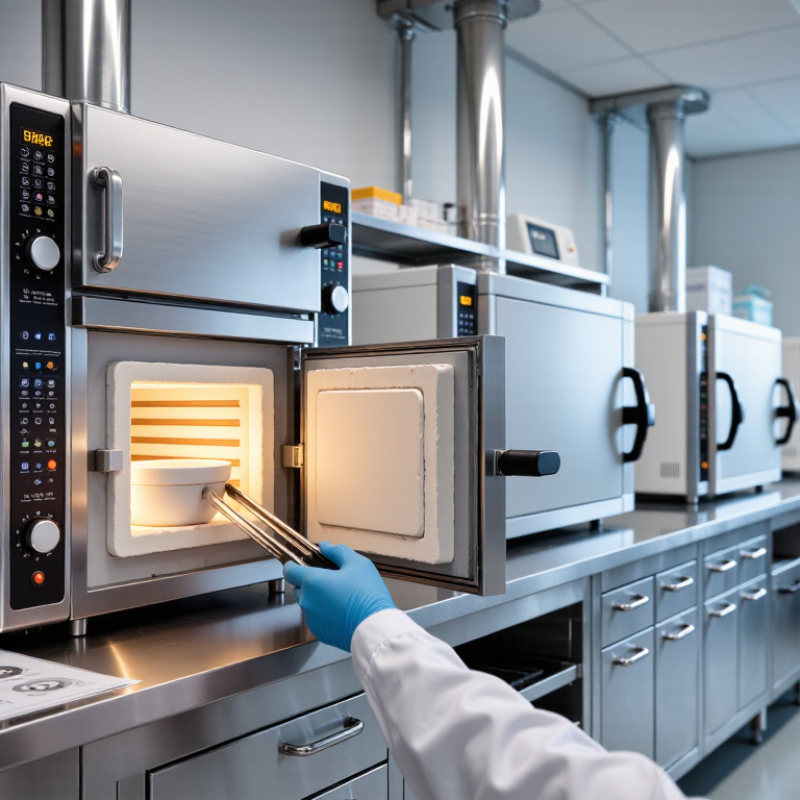
China Top Muffle Furnace Manufacturers for Global Buyers

What a Muffle Furnace Is and How It Works

A muffle furnace is a heated chamber designed to expose samples to controlled high temperatures while separating them from direct combustion gases. Its insulated walls retain heat, while electrical elements around the chamber raise the temperature. The sample sits in a ceramic or metal tray inside the chamber. No direct flame.

When the furnace starts, a controller supplies power to the heating elements. A thermocouple measures chamber temperature and sends readings back to the controller. The operator sets a target temperature and, on many models, a heating rate and holding time. Once the target is reached, the furnace maintains heat for the chosen period. The display shows chamber temperature, not necessarily the exact temperature inside every sample. Small differences matter.

In practice, this equipment is used for tasks such as ash testing, material heat treatment, and ceramic work. A tightly packed chamber may heat unevenly, so loading affects results. Allowing a cold furnace to heat too quickly can also stress the chamber lining. Follow the operating manual, use suitable protective equipment, and let the unit cool before handling trays. Even with careful settings, results can vary; recording the load arrangement and heating cycle helps make tests more repeatable.

Types, Temperature Ranges, and Key Technical Features

Muffle furnaces separate the heated chamber from many external contaminants, making them useful for ashing, heat treatment, and material testing. Compact box models suit routine laboratory work, while larger or bottom-loading designs accommodate heavier samples. Tube furnaces offer controlled heating along a narrow chamber and can support specific gas environments when properly configured. The details matter.

Typical laboratory models operate around 1,000–1,200°C; higher-temperature designs may reach 1,400–1,700°C or more. These figures describe possible operating ranges, not guaranteed performance for every load. Check the rated maximum, usable chamber size, temperature uniformity, heating rate, and recovery time. A controller with programmable ramps helps repeatable processes, while suitable thermocouples and calibration records support dependable readings. Maximum temperature alone is a poor buying guide.

Tips: Compare the working temperature with the furnace’s continuous-use rating, leaving a practical margin. Confirm that trays and sample holders tolerate the intended heat. Ask suppliers for test data at representative chamber locations, not just empty-chamber specifications. Door interlocks and over-temperature protection are worth checking. Specifications can look tidy on paper; real workloads are less tidy.

China’s Muffle Furnace Manufacturing Landscape

China’s muffle furnace manufacturing landscape includes established industrial regions, specialist workshops, and suppliers serving laboratories, universities, and production facilities. Many manufacturers can configure chamber volume, maximum temperature, heating elements, insulation, and controller functions for specific processes. A compact bench unit may suit routine ashing, while a larger chamber can handle heavier batches. Details matter. Buyers should compare usable chamber dimensions, temperature uniformity, ramping behavior, and recovery after opening the door—not just the stated maximum temperature. Construction choices are visible too: door fit, insulation edges, wiring protection, and the control interface can indicate how carefully a unit was assembled.

The market offers broad component sourcing, flexible production, and export experience. Yet quality varies between suppliers. Some product pages list impressive temperature figures but provide little detail about sensor placement, calibration methods, or test conditions. Ask for a temperature-uniformity report, wiring diagram, maintenance guidance, and clear warranty terms. Check whether specifications apply to an empty or loaded chamber. It may not be obvious. For repeatable work, discuss sample materials, atmosphere requirements, daily operating hours, and local service before ordering. Factory photographs and certificates can help, but they cannot replace technical discussion or documented inspection. Agree on acceptance checks, spare parts, and response times before payment.

How to Evaluate Chinese Manufacturers and Their Products

China Top Muffle Furnace Manufacturers for Global Buyers

When evaluating Chinese manufacturers, compare documented performance, not catalogue claims. The global laboratory equipment market reached an estimated USD 37.6 billion in 2022, according to Grand View Research’s Laboratory Equipment Market report. That growth makes supplier choice more important, but market size does not prove furnace quality. Ask for test records tied to the exact model and chamber size.

Check the basics. Request the usable hot-zone dimensions, maximum operating temperature, heating-rate limits, and temperature-uniformity results. A stated maximum temperature alone tells little about performance under load. Ask whether uniformity was tested in an empty chamber or with a representative load. Look for sensor type, calibration traceability, over-temperature protection, and clear maintenance instructions. Request photographs of the controller, insulation, and heating elements—not just polished exterior shots.

Review a sample inspection report before ordering. It should identify test conditions, measurement locations, instruments, and acceptance limits. Confirm which parts are replaceable and how quickly common spares can ship. A short video of a cold-start cycle can reveal controller behavior, though it cannot replace independent testing. One point is easy to miss: published tests rarely match your exact sample shape or loading pattern. Ask for a written acceptance test based on your process. A brochure may look complete. The evidence may not be.

China Muffle Furnace Manufacturers: Buyer Evaluation Framework

Suggested buyer-defined weighting for comparing supplier evidence. These percentages are an example evaluation framework, not market-survey results or ratings of specific manufacturers.

Review technical specifications, temperature-uniformity and calibration records, safety documentation, and service terms. Adjust the weights to match your process requirements, then compare suppliers using the same evidence criteria.

Global Sourcing, Compliance, and After-Sales Support

Global buyers comparing muffle furnace manufacturers in China should look beyond quoted price and delivery time. Ask for a written specification covering chamber size, maximum temperature, temperature uniformity, heating elements, controller, and supply voltage. Small mismatches matter. A furnace designed for a different power supply may need adaptation, adding cost and delay. Request inspection records, calibration details, and a test report for the proposed model. Check that documents identify the actual factory and equipment, not only a trading office. Paperwork can look complete. It still needs checking.

Compliance depends on the destination and application. Confirm relevant electrical and safety requirements with qualified local specialists before ordering. Ask which certificates are available and whether they cover the exact configuration. A certificate for a similar unit is not enough. For after-sales support, agree in writing on response times, remote troubleshooting, spare-part availability, warranty exclusions, and freight costs. Request an English manual, wiring diagram, and video showing routine maintenance. These details help after installation. This checklist is not foolproof. Time-zone differences and unclear fault reports can still slow repairs, so keep photos, alarm codes, and operating logs ready. Test the support channel before shipment.

Top