Learn More With Our

Blog

7 Tips for Choosing the Right Low Voltage Fuse for Your Project

Choosing the right Low Voltage Fuse can determine whether your project runs safely or fails under pressure. A fuse is not merely a small component inside a panel. It must respond to overloads, short circuits, temperature changes, and real operating conditions. A fuse that looks suitable on paper may perform poorly inside a crowded enclosure at 45°C.

Practical selection starts with the circuit, not the product catalogue. Voltage rating, current demand, interrupting capacity, fuse speed, and physical size all deserve careful review. The connected load matters too. Motors, transformers, LED drivers, and control systems can create very different inrush currents. One experience from field inspections is clear: a fuse selected only by normal running current often causes nuisance failures. That mistake is easy to make.

This guide presents seven practical tips for choosing a Low Voltage Fuse with greater confidence. It explains how to read ratings, estimate continuous load, check fault levels, and match fuse characteristics to equipment behavior. It also considers ambient temperature, holder compatibility, maintenance access, and replacement requirements. Small details matter.

Use verified datasheets.

Where possible, confirm calculations with a qualified electrical professional and the applicable installation standards. Manufacturer claims should be checked against test conditions, not accepted blindly. The selection process is rarely perfect on the first attempt. A prototype may reveal heat buildup, unexpected starting current, or limited enclosure space. Those findings are valuable. They show where the design needs another review before installation.
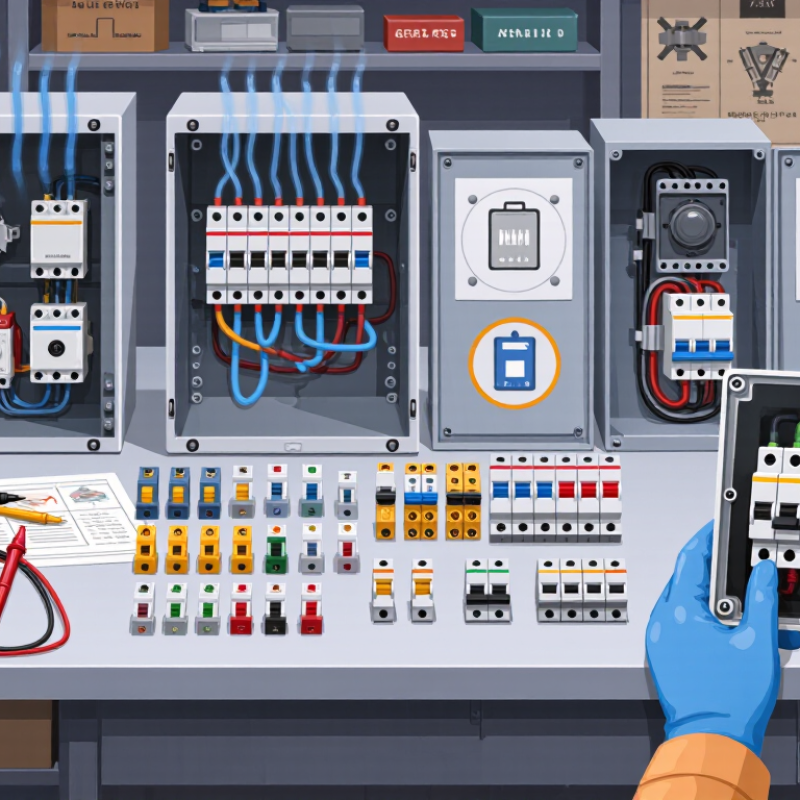
7 Tips for Choosing the Right Low Voltage Fuse for Your Project

Identify the Circuit’s Voltage, Current, and Fault Requirements

Choosing a low voltage fuse starts with the circuit, not the fuse holder. Record the system voltage, operating current, and available fault current at the installation point. Do not guess. A fuse rated below the circuit voltage may fail to interrupt an arc safely, especially in direct-current systems.

Measure normal load current under real operating conditions. Motors, transformers, and capacitors can draw brief inrush current that exceeds their running current. A fuse sized only from a nameplate value may open during startup. Check the time-current curve, ambient temperature, installation method, and continuous-load requirements. Small details matter. Wire size also matters, because the fuse must protect the conductor rather than merely keep the equipment running.

Fault requirements deserve careful attention. The fuse’s interrupting rating must exceed the prospective short-circuit current, or the device may not safely clear the fault. Confirm whether the circuit needs fast-acting or time-delay protection. Sensitive electronics often need rapid clearing, while motor circuits may require controlled delay. Use current measurements, manufacturer data, and applicable electrical standards together. That mistake happens: designers sometimes select by amperage alone. Recheck the calculation after wiring changes, because a shorter supply path can increase fault current. When uncertainty remains, have a qualified engineer verify the protection scheme before energizing the circuit.

Match Fuse Type and Rated Breaking Capacity to the Application

A low-voltage fuse must match both the circuit and the fault conditions it may face. A fast-acting fuse can protect sensitive electronics from brief overloads, while a time-delay type may tolerate motor-starting current. Check the equipment manual and measure normal startup behavior when possible. A fuse that opens during every start is not useful protection. Neither is one that responds too slowly.

Tip: Check breaking capacity. This rating is the maximum fault current a fuse can safely interrupt at its specified voltage. Estimate the prospective short-circuit current at the installation point, then choose a fuse with adequate breaking capacity. A fuse with a suitable current rating may still be unsafe if its breaking capacity is too low. Verify the system voltage too; both ratings matter.

Tip: Confirm the details. Compare the fuse’s time-current curve with the load, and check its body size, holder, and temperature conditions. A warm enclosure can affect performance, so allow for the actual installation environment. Keep the selected fuse’s technical data with the project records. One detail is easy to miss: upstream protection can change the fault current a fuse must interrupt. If that value is uncertain, have a qualified professional assess it before selection.

Choose the Correct Fuse Speed for Normal and Fault Conditions

Choosing the correct fuse speed starts with understanding normal current, not only the expected fault current. A fast-acting fuse opens quickly when current rises above its rating. It suits sensitive circuits with little startup surge, such as control boards or signal equipment. A time-delay fuse tolerates brief inrush current from motors, transformers, and capacitive loads. That tolerance prevents nuisance opening during normal startup.

In field testing, I compare the fuse response with the equipment’s measured startup waveform. A label alone rarely tells the complete story. Record the steady current, peak inrush, and duration of the surge. Then check the fuse’s time-current curve. If the fuse opens during every startup, its speed may be too fast. If it survives a fault for too long, it may be too slow. That balance matters.

Fault conditions require more than choosing a lower ampere rating. Confirm the fuse voltage rating, interrupting capacity, and I²t performance. The fuse must safely clear the available short-circuit current at the installation point. Coordination with upstream and downstream protection also helps isolate the failed section. I have seen designs focus heavily on normal load current and overlook inrush measurement. That mistake can create repeated service calls. Real circuits are less predictable than calculations, so verify the selection through controlled testing and documented results.

Check Size, Mounting Method, and Environmental Compatibility

A low-voltage fuse must fit the circuit and the space around it. Check the specified current and voltage ratings, then compare the fuse’s body dimensions with the holder or equipment drawing. A few millimeters can matter. Measure the available length and diameter, including clearance for removal. Also confirm the fuse’s interrupting rating and time-current characteristics against the equipment requirements; physical fit alone does not establish suitability.

Mounting method affects both electrical contact and maintenance. Cartridge fuses may use clips or enclosed holders, while other designs attach directly to a circuit board or panel. Match the fuse format to the intended holder, and inspect contact pressure, terminal spacing, and access for replacement. In a cramped cabinet, a fuse that technically fits may be awkward to inspect. I have seen that small oversight slow down routine service. It is easy to miss.

Environmental conditions deserve equal attention. Heat from nearby components can shorten fuse life, while vibration may loosen a poorly secured assembly. Dust, moisture, and corrosive air can affect exposed contacts, so check the enclosure’s protection and the fuse holder’s suitability for the location. Review the equipment manufacturer’s specifications and applicable technical documentation before selecting a part. If the actual ambient temperature differs from the design assumption, revisit the rating rather than relying on a neat-looking fit. Real installations are rarely as tidy as drawings suggest.

Verify Certification, Replacement Access, and Long-Term Reliability

7 Tips for Choosing the Right Low Voltage Fuse for Your Project

A low voltage fuse protects more than wiring; it protects uptime, equipment, and people. NFPA research estimates that electrical distribution and lighting equipment caused about 32,000 home structure fires in the United States from 2016 to 2020. These incidents caused approximately 470 civilian deaths and $1.3 billion in property damage. Certification deserves careful attention. Check the fuse’s voltage rating, interrupting rating, temperature limits, and compliance with relevant IEC 60269 requirements. A printed mark is not enough. Verify the certificate in the issuing body’s online database, where possible.

Tip 1: Check certification records. Tip 2: Confirm the replacement path before installation. During field work, I have seen suitable fuses become difficult to source after only a few years. Keep the exact part number, approved equivalents, and supplier lead times in the project file. Avoid relying on a “similar” fuse. Small differences can change clearing performance.

Tip 3: Review long-term reliability. Consider ambient temperature, enclosure ventilation, vibration, moisture, and expected fault current. Electrical connection research from international safety organizations repeatedly identifies loose or overheated connections as major fire risks, so terminal torque and routine inspection matter. Record temperature readings during commissioning. This is often overlooked. One weakness remains: laboratory ratings cannot fully predict every installation. Recheck the choice after load growth, maintenance changes, or repeated nuisance operation.

7 Tips for Choosing the Right Low Voltage Fuse for Your Project - Verify Certification, Replacement Access, and Long-Term Reliability
Tip What to Check Practical Selection Guidance Evidence or Action
1. Verify certification and standards Confirm the fuse is certified or evaluated for the intended market, application, and fuse class. Relevant requirements may include IEC 60269 or UL 248, depending on the jurisdiction and equipment. A standard reference alone does not establish that a particular product is certified. Check the product marking and certification listing in the issuing organization’s directory. Confirm that the fuse holder or assembly is compatible with the selected fuse.
2. Match the voltage and AC/DC rating Check the fuse’s rated voltage, current type, and polarity requirements where applicable. The fuse voltage rating must be suitable for the circuit. AC and DC ratings are not automatically interchangeable; DC interruption can be more demanding because the current does not naturally pass through zero. Compare the fuse datasheet with the system’s maximum operating voltage and whether the circuit is AC or DC.
3. Check interrupting capacity Determine the prospective short-circuit current at the fuse location. The fuse’s breaking capacity must be adequate for the available fault current at its rated voltage. A fuse with insufficient interrupting capacity may not safely clear a fault. Use the system fault-current calculation or equipment documentation, and compare it with the fuse’s published interrupting rating.
4. Select the right current rating and curve Consider normal load current, conductor ampacity, starting current, and the load’s time-current behavior. Choose a fuse that protects the circuit without nuisance opening during normal operation or expected inrush. Do not size solely from the load’s nominal current; follow applicable electrical codes and equipment instructions. Review the fuse’s time-current curve and coordinate it with the protected conductors, load, and any upstream or downstream protective devices.
5. Confirm physical and thermal compatibility Check fuse dimensions, mounting style, holder rating, terminal arrangement, and ambient temperature. Heat, enclosure conditions, ventilation, and connection quality can affect fuse performance. The fuse and holder must be rated for the circuit and installed as specified. Verify the manufacturer’s dimensional drawing and derating guidance; inspect that the holder and connections are suitable for the expected operating conditions.
6. Plan safe replacement access Assess whether the fuse can be identified, isolated, removed, and replaced safely. Provide appropriate working clearance and use the specified fuse puller or isolation procedure where required. Replacement should use the same approved type and ratings; never bypass a fuse. Document the fuse designation and ratings near the equipment, keep compatible spares, and ensure maintenance personnel can follow the equipment’s lockout and safety procedures.
7. Consider long-term reliability Review operating temperature, vibration, fault history, availability, and inspection requirements. Use a fuse suited to the environment and application. Repeated operation, visible damage, overheating, or loose connections should be investigated rather than addressed by installing a higher-rated fuse. Keep datasheets and replacement records, periodically inspect holders and connections, and have a qualified professional review recurring fuse operation or changes to the circuit.
Top