


Choosing among the top Ftir Atr Spectroscopy suppliers worldwide requires more than comparing prices or instrument photographs. A reliable supplier should demonstrate optical expertise, stable hardware, responsive service, and proven application support. In a laboratory, small details matter: a clean diamond crystal, a steady pressure arm, clear software prompts, and spectra collected within seconds. These details influence confidence in every result.
Brian C. Smith, a recognized infrared spectroscopy expert and author, describes ATR as “a simple, versatile, and powerful sampling technique.” That practical view remains relevant. Ftir Atr Spectroscopy can examine powders, polymers, oils, coatings, and biological materials with limited preparation. However, performance varies between suppliers. Crystal quality, spectral range, detector design, background correction, and software usability deserve careful review. Marketing language is not enough.
The strongest worldwide suppliers usually provide application notes, traceable calibration guidance, training, and accessible technical support. Their systems should also integrate smoothly with existing laboratory workflows. Ask for data from samples similar to yours. Inspect baseline stability, repeatability, and library-search accuracy. Do not overlook service response times.
There is no perfect supplier.
Even experienced buyers can overvalue specifications and undervalue support. A compact instrument may suit routine identification, while a research laboratory may need broader accessories and advanced automation. This guide compares leading suppliers through an evidence-based lens, combining technical capability, customer experience, product reliability, and industry reputation. Some conclusions remain open to review, because supplier performance can change with ownership, software updates, and regional service quality.
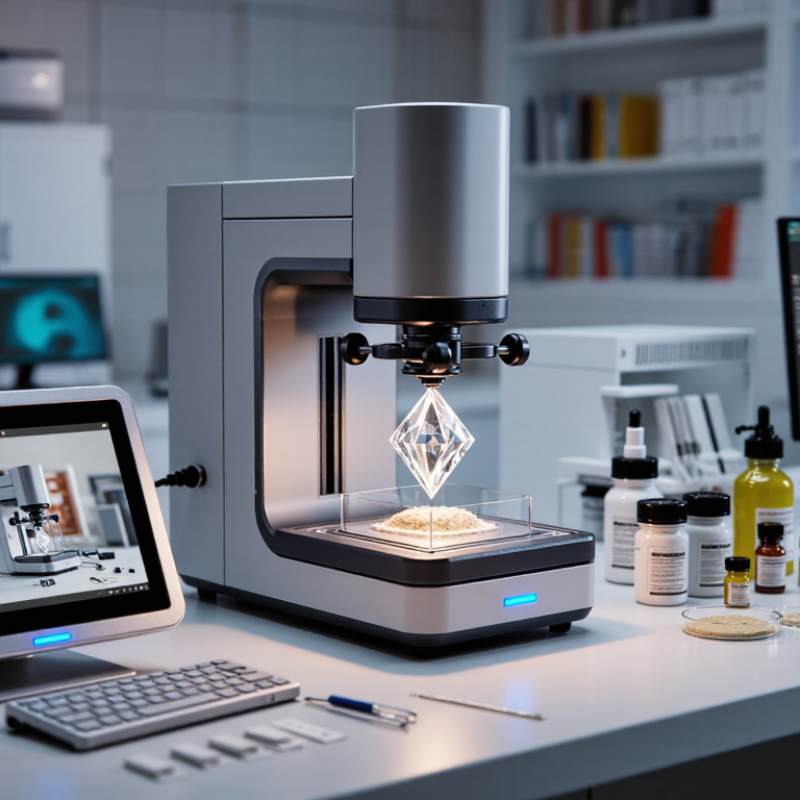
Fourier-transform infrared attenuated total reflectance (FTIR-ATR) spectroscopy identifies materials through molecular vibrations. A broadband infrared beam enters a high-refractive-index crystal, often diamond, germanium, or zinc selenide. It reflects internally at the crystal surface.
That reflection creates an evanescent field. It reaches only a few micrometres into the sample. Chemical bonds absorb selected infrared frequencies, producing a spectrum from roughly 4,000 to 400 cm⁻¹. The instrument converts the interferogram through a Fourier transform. Analysts then compare peaks with validated reference libraries or known standards.
According to Grand View Research’s 2024 market analysis, the global FTIR market is projected to grow at approximately 6.5% annually through 2030. A separate MarketsandMarkets report also forecasts strong growth, driven by pharmaceutical, polymer, food, and environmental testing. These figures describe market demand, not guaranteed instrument performance.
In practical work, sample contact matters greatly. Uneven films, weak pressure, moisture, and residue can distort peaks. Cleaning the crystal between measurements is essential. ATR is fast, but it is not magic. Surface chemistry may differ from bulk composition. Wavenumber accuracy, spectral resolution, background stability, and service support should guide supplier evaluation. ASTM E1252 and ISO/IEC 17025 principles can strengthen method validation, although many routine laboratories apply them imperfectly.
| Evaluation Dimension | Typical Technical Value or Range | Why It Matters When Selecting a Supplier | Common Applications |
|---|---|---|---|
| Measurement principle | An infrared beam enters an ATR crystal and undergoes internal reflection, producing an evanescent wave that interacts with the sample surface. | Suppliers should provide clear optical documentation, validated accessories, and application guidance for solid, liquid, and semi-solid samples. | Material identification, contamination checks, polymer analysis, pharmaceutical testing, and quality control. |
| Typical mid-infrared range | Approximately 4,000–400 cm−1, depending on the instrument, beamsplitter, detector, and ATR crystal. | A wider usable range can improve access to functional-group and fingerprint-region information. | Organic compounds, coatings, elastomers, oils, solvents, powders, and biological materials. |
| Routine spectral resolution | 4 cm−1 is common for routine identification; 2 cm−1 or 1 cm−1 may be selected for better separation of narrow bands. | Higher resolution may improve peak discrimination but can increase acquisition time and data size. | Research spectroscopy, mixture analysis, reaction monitoring, and library matching. |
| ATR penetration depth | Typically about 0.5–5 μm, depending on wavelength, incidence angle, crystal refractive index, and sample refractive index. | The technique is highly surface-sensitive; suppliers should explain sampling depth and its effect on layered or coated materials. | Surface contamination, thin coatings, films, paints, laminated materials, and heterogeneous solids. |
| Diamond ATR crystal | Very hard and chemically resistant; suitable for many solids, powders, liquids, and abrasive samples. | A strong general-purpose option with low maintenance and good resistance to routine mechanical wear. | Polymers, pharmaceuticals, minerals, rubber, food materials, and industrial samples. |
| Zinc selenide crystal | Good infrared transmission across much of the mid-IR region; softer and more chemically vulnerable than diamond. | Useful for routine liquid and soft-sample measurements, but chemical compatibility and cleaning procedures must be confirmed. | Liquids, oils, solvents, polymers, and non-abrasive laboratory samples. |
| Germanium crystal | High refractive index and relatively shallow sampling depth; commonly used when surface sensitivity is important. | Can reduce the contribution from bulk material and is useful for strongly absorbing or high-refractive-index samples. | Thin films, coatings, dark samples, carbon-filled polymers, and surface analysis. |
| Number of ATR reflections | Single-reflection designs are common; multiple-reflection designs can increase effective interaction and sensitivity. | The supplier should match the reflection design to sample contact, expected concentration, and required throughput. | Single-point identification, low-level component analysis, liquids, and continuous testing. |
| Sample preparation | Usually minimal or unnecessary; the sample must make adequate, uniform contact with the crystal. | Efficient workflows reduce solvent use, preparation time, and operator variability. | Incoming inspection, production-line checks, forensic screening, and rapid laboratory testing. |
| Pressure-control accessories | Adjustable pressure devices help maintain reproducible contact for solids, powders, and rough surfaces. | Consistent contact improves repeatability and reduces differences between operators. | Powders, pellets, textiles, rubber, composites, and irregular solid parts. |
| Atmospheric compensation | Software may compensate for atmospheric water vapor and carbon dioxide features; purge systems can further reduce interference. | Important for low-concentration measurements, long scans, and laboratories with changing humidity. | Quantitative analysis, spectral library creation, and regulated quality-control workflows. |
| Detector options | DTGS detectors are widely used for routine work; cooled detectors can offer improved sensitivity for demanding applications. | Detector selection should reflect signal strength, scanning speed, spectral range, and sensitivity requirements. | Routine identification, rapid screening, trace-level measurements, and time-resolved experiments. |
| Validation and reference standards | Method documentation can reference recognized practices such as ASTM E1252 for obtaining and interpreting infrared spectra. | Documented validation, calibration, repeatability, and audit trails are important for regulated or quality-critical environments. | Pharmaceuticals, food testing, petrochemicals, environmental analysis, and manufacturing QA. |
| Software and data integrity | Key functions include background correction, ATR correction, baseline processing, library search, export, user permissions, and audit trails. | Software capability often determines workflow efficiency and suitability for electronic-record requirements such as 21 CFR Part 11 environments. | Regulated laboratories, multi-user facilities, remote review, and automated reporting. |
| Service and lifecycle support | Relevant factors include installation, training, preventive maintenance, spare parts, crystal replacement, software updates, and technical response time. | Long-term support can have a greater effect on total ownership cost than the initial instrument price. | Central laboratories, production facilities, contract testing, universities, and distributed global operations. |
Note: Technical performance varies by instrument configuration, optical components, ATR crystal geometry, sample properties, and measurement conditions. Supplier comparisons should be based on application-specific demonstrations and documented specifications.