Learn More With Our

Blog

How to Choose the Best Fountain Contractors?

Choosing the right Fountain Contractors can shape the beauty, safety, and long-term value of your water feature. A fountain may look simple, but its success depends on careful design, hydraulic planning, durable materials, and reliable maintenance. Before signing an agreement, examine each contractor’s experience with projects similar to yours. A courtyard fountain requires different skills from a large commercial installation.

Look closely at completed work. Ask to see fountains with similar dimensions, finishes, and pump systems. Visit a project when possible. Notice water clarity, spray consistency, surface stains, and background noise. These details reveal workmanship better than attractive photographs. Request clear information about drainage, electrical coordination, waterproofing, cleaning access, and seasonal servicing. Experienced Fountain Contractors should explain these points without hiding behind technical language.

Credentials matter, but they are not the whole decision. Confirm references, written warranties, insurance, project schedules, and the quality of proposed equipment. A dependable contractor should measure the site, discuss operating costs, and identify possible problems before construction begins. Unusually low bids deserve careful questions. They may exclude filtration, lighting, excavation, or future repairs.

There is no perfect contractor.

Even careful planning can miss something. Soil conditions may change, or a pump may need adjustment after launch. What matters is how openly the contractor responds. Choose a team that documents decisions, communicates delays, and accepts reasonable scrutiny. Professional advice should feel practical, not pressured. The best choice balances proven experience, honest communication, technical knowledge, and a realistic maintenance plan.
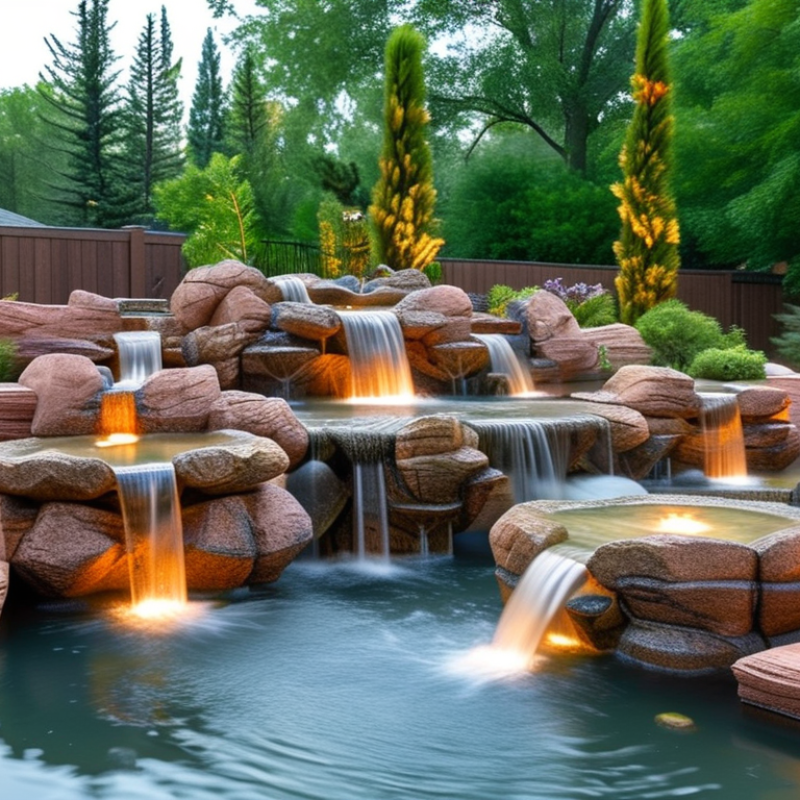
How to Choose the Best Fountain Contractors?

Define Fountain Scope: Basin Size, Spray Height, Flow Rate, and Budget

How to Choose the Best Fountain Contractors?

Define Fountain Scope: Basin Size, Spray Height, Flow Rate, and Budget

A reliable fountain project starts with a measurable scope, not attractive sketches. Record the available footprint, surrounding paths, drainage points, and power access. A 4-meter basin may look impressive, yet it can overwhelm a narrow courtyard. Leave safe clearance for cleaning and maintenance. Ask the contractor for scaled drawings and a written equipment schedule. Small details matter.

Set the spray height according to the setting.

A tall jet needs stronger pumps, stable foundations, and protection from wind. For a sheltered lobby, 1.5 meters may create a calm visual effect. In an open plaza, taller sprays can lose shape quickly. Flow rate must match nozzle quantity and height. Request calculations showing pump capacity, pipe diameter, filtration, and expected water loss. Do not accept a guess.

Budget for construction, controls, lighting, water treatment, electricity, and annual servicing.

Obtain itemized quotations, including excavation and future replacement parts. During site work, I have seen attractive plans fail because maintenance access was ignored. I also underestimated splash drift once. That mistake was expensive. Choose contractors who explain risks clearly, show relevant completed work, and provide realistic timelines. References are useful, but written responsibilities are stronger. Review exclusions carefully before signing.

Verify Licenses, Insurance, and at Least Three Comparable Projects

How to Choose the Best Fountain Contractors?

Verify licenses, insurance, and at least three comparable projects before discussing design details. A polished proposal proves little by itself. Ask for the contractor’s license number, then confirm it with the relevant local authority. Check whether the license covers water features, electrical work, and structural installation. Requirements vary by location. Do not assume.

Request current general liability and workers’ compensation certificates. The certificate should show valid dates, coverage limits, and the insured business name. Call the insurer using an independently verified number. A contractor who avoids this request may create serious financial risk. Even careful companies can provide outdated paperwork.

Ask for three completed projects similar to yours in scale and system type. Comparable means more than attractive photographs. Look for similar basin size, pump capacity, filtration needs, and outdoor exposure. Contact each owner directly. Ask whether the fountain started on schedule, how repairs were handled, and whether water loss became a recurring problem. Visit one project if possible. Notice algae, cracked finishes, noisy pumps, or standing water. Small details matter.

A written scope should identify equipment, drainage, electrical connections, maintenance access, and warranty responsibilities. One overlooked issue can become expensive. I would also ask who performs seasonal inspections. Some contractors install beautifully but disappear afterward. That possibility deserves an honest conversation.

How to Choose the Best Fountain Contractors?

Verify licenses, insurance, and at least three comparable projects before selecting a fountain contractor.

The chart shows the recommended minimum screening evidence: one valid contractor license, one current proof of insurance, and at least three completed projects comparable in size, design, and technical requirements.

Compare Hydraulic Designs Using Flow, Total Head, and 1–2-Hour Turnover

How to Choose the Best Fountain Contractors?

A capable fountain contractor should explain hydraulic design in measurable terms. Ask for the planned flow rate, total head, and turnover time. Flow controls the visible water pattern and nozzle performance. Total head includes vertical lift, pipe friction, bends, valves, and equipment resistance. A design may look efficient on paper but fail after installation.

For example, a 30,000-liter basin needs 15,000 to 30,000 liters per hour for a one- to two-hour turnover. This calculation is only a starting point. The contractor should show pipe sizes, pump curves, operating pressure, and expected nozzle flow. Request site measurements, not rough guesses. Watch for unclear allowances around filters, grilles, and changing water levels. Small details matter.

Experience matters here. I have seen attractive fountain layouts lose height because the contractor underestimated friction through narrow pipes. It was an avoidable mistake. Still, calculations can be imperfect when wind, evaporation, or future landscaping changes the system. A reliable contractor explains those risks openly and offers adjustment points.

Ask how flow will be tested after commissioning.
Ask whether total head will be checked under real operating conditions.

The best proposal connects calculations with visible results, service access, energy use, and safe maintenance procedures.

Numbers first. Appearance follows.

Check Electrical Safety Against NEC GFCI and Bonding Requirements

How to Choose the Best Fountain Contractors?

Electrical safety should be discussed before a contractor prices the stonework. Ask which NEC edition your local authority has adopted. Requirements can change by location and project type. A qualified electrician should inspect the circuit, disconnect, junction boxes, and pump wiring. Wet areas need correctly selected equipment and reliable GFCI protection. Do not accept a verbal promise.

Ask for a clear testing plan. The contractor should test the GFCI during installation and document the results. The test button is useful, but it is not the whole inspection. A proper meter test can reveal wiring faults that a simple button may miss. Ask who performs this work. It should be a licensed professional familiar with outdoor water features.

Bonding deserves equal attention. Metal basins, grates, railings, pump housings, and nearby conductive parts may require connection to an equipotential bonding system. This helps reduce dangerous voltage differences around the water. Request a drawing showing bonding connections and accessible testing points. Field conditions can be messy. A hidden connection is difficult to verify later.

Look for careful questions, not fast confidence. In site reviews, small oversights often involve damaged conduit or an inaccessible disconnect. That is worth remembering. I would also ask for inspection records, permits, and maintenance instructions. No contractor gets every detail right automatically, including experienced teams. A strong contractor welcomes independent inspection and explains any limitation before the fountain is filled.

Calculate Lifecycle Energy Costs Using 0.746 kW per Pump Horsepower

How to Choose the Best Fountain Contractors?

Calculate Lifecycle Energy Costs Using 0.746 kW per Pump Horsepower

A capable fountain contractor should discuss energy before discussing finishes. Ask for pump horsepower, daily runtime, seasonal use, and the local electricity rate. These figures reveal the real operating cost.

Use this practical conversion: one pump horsepower equals 0.746 kilowatts. A 5-horsepower pump therefore represents 3.73 kW. If it runs ten hours daily for 330 days, annual consumption reaches 12,309 kWh. At $0.15 per kWh, that equals about $1,846 yearly. The estimate is simple.

Reality is less tidy. Pump motors, controls, pipe friction, and water features create additional losses. If the motor system operates at 85% efficiency, input demand may approach 4.39 kW. The yearly cost then rises near $2,173. A contractor who ignores these losses may offer an attractive, unreliable estimate.

Request measured data, not only catalog figures. An experienced contractor can compare pump curves, flow requirements, variable-speed controls, and maintenance records. Ask how the system performs during quiet hours. Smaller operating schedules can reduce lifetime costs substantially.

I once trusted the nameplate alone.

That was too optimistic.

Good contractors explain their assumptions in writing. They should also show replacement intervals, access requirements, and expected energy use over ten years. Ask for a site-specific calculation, because two visually similar fountains can consume very different amounts of power. Performance matters, but the meter tells the harder truth.

Top