


Choosing High Quality Cabinet Hardware in 2026 requires more than matching a finish to a door style. Buyers now expect reliable movement, corrosion resistance, safe materials, and long-term value. A polished knob means little if its screw loosens after repeated cleaning.
Industry data supports this higher standard. The National Kitchen & Bath Association’s 2025 Kitchen Trends Report identifies durability, functional storage, and thoughtful personalization as continuing priorities in renovation projects. Houzz’s 2025 U.S. Kitchen Trends Study also shows that homeowners are investing in upgraded kitchen features rather than treating hardware as a minor decoration. Meanwhile, Grand View Research’s kitchen cabinet market analysis indicates continued market expansion, increasing competition among suppliers and product claims.
The details matter.
A quality evaluation should examine the base metal, coating thickness, thread accuracy, mounting strength, and corrosion performance. Stainless steel, solid brass, and zinc alloys can all perform well, but their results depend on composition and manufacturing control. Look for consistent dimensions, smooth edges, tight threads, and finishes that remain uniform around corners. For coastal homes, salt-air resistance deserves special attention. Testing aligned with ASTM or ISO methods can provide stronger evidence than attractive packaging.
Real-world experience also matters. Open a drawer repeatedly. Check whether the pull flexes. Inspect the rear mounting plate, where weak products often reveal themselves. Certifications and test reports improve reliability, but they are not perfect substitutes for supplier transparency.
That is the difficult part.
A supplier may publish impressive numbers without explaining test conditions. This guide therefore compares specifications, independent evidence, installation performance, and warranty terms before recommending High Quality Cabinet Hardware for 2026 projects.
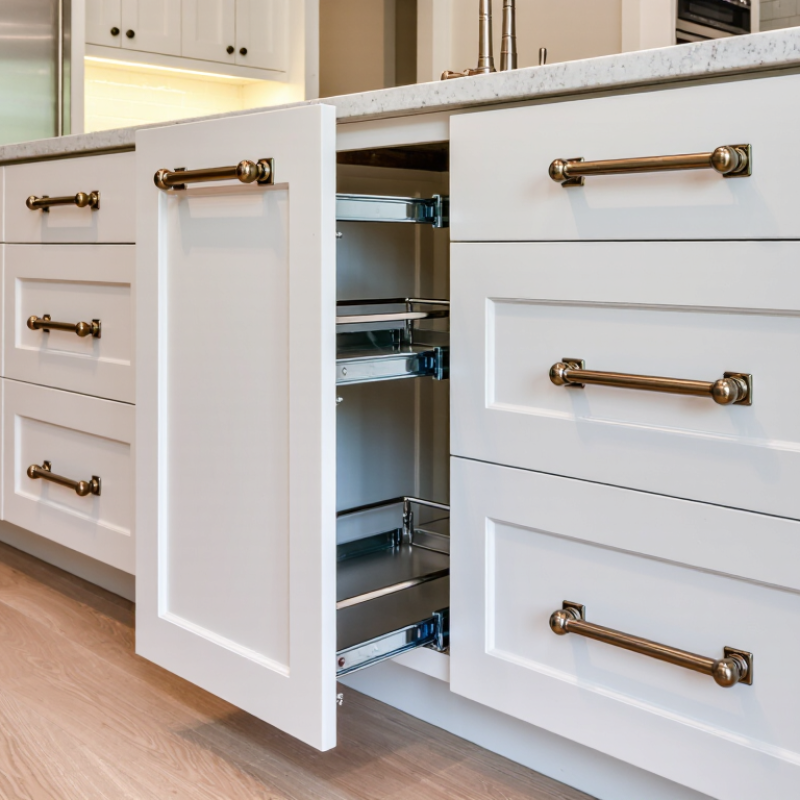
How to Choose High Quality Cabinet Hardware in 2026?
Cabinet hardware is not one interchangeable category. Knobs offer a compact grip for doors and small drawers. Pulls provide better leverage, especially on wide drawers or users with limited hand strength. Cup pulls suit traditional kitchens, but their recessed shape can collect crumbs. Hinges control movement, alignment, and closing speed. Drawer slides determine load capacity and everyday smoothness. These differences matter more than decoration.
A 2024 Grand View Research market analysis estimated the global cabinet hardware market at approximately 14 billion dollars. The report also projected steady growth through 2030. That expansion reflects renovation activity, but market size does not prove quality. In my installation experience, a heavy pull can still feel poor when its mounting screws loosen. Check the base thickness, screw length, finish consistency, and stated load rating. Stainless steel usually handles moisture better than untreated iron. Yet even stainless steel can corrode near salt air without proper maintenance.
Measure the user’s hand before choosing pull length. Test one sample on a working cabinet. Small details expose weak design. A 2024 Houzz kitchen trends report identifies hardware replacement as a common part of kitchen updates, although reported preferences vary by region and project budget. I would not trust a catalog photograph alone. Some finishes look refined online but show fingerprints immediately. That is an easy mistake. Also, mixing knobs, bar pulls, and cup pulls can improve function, but inconsistent projection depths may create awkward contact points.
A practical comparison of cabinet hardware types, construction features, and selection criteria
| Hardware Type | Primary Function | Typical Cabinet Location | Operating Mechanism | Recommended Material Characteristics | Key Quality Indicators | Installation Considerations | Best Use Case | Typical Durability Priority |
|---|---|---|---|---|---|---|---|---|
| Cabinet Knob | Provides a compact gripping point for opening a door or small drawer. | Cabinet doors and narrow drawers. | Fixed single-point attachment; the user pulls the knob outward. | Solid metal, corrosion-resistant stainless steel, or durable zinc-based alloy with a well-sealed finish. | Secure base, clean threads, smooth edges, stable mounting, and no visible plating bubbles or cracks. | Usually requires one drilled hole; screw length must match the door or drawer front thickness. | Traditional, minimalist, or space-conscious cabinet designs. | Medium to High |
| Cabinet Pull | Offers a larger gripping surface and distributes pulling force across two mounting points. | Drawers, doors, tall pantry units, and frequently used cabinets. | Two-point fixed handle; the user grips and pulls the bar or handle. | Stainless steel or solid metal with a consistent wall thickness and a durable surface treatment. | Rigid construction, accurately aligned mounting holes, comfortable grip, strong screw connection, and uniform finish. | Requires accurate center-to-center measurement and a drilling template for consistent placement. | High-use kitchens, bathrooms, utility rooms, and larger drawer fronts. | High |
| Cup Pull | Creates a recessed grip that allows the drawer to be pulled from underneath. | Drawer fronts, especially in traditional or farmhouse-style cabinetry. | Recessed cup-shaped grip supported by multiple mounting points. | Thick-gauge metal with a stable finish; the recessed cavity should be smooth and free from sharp edges. | Firm attachment, comfortable finger clearance, strong mounting points, and resistance to finish wear at the grip area. | Requires careful positioning and may need pilot holes because the hardware is often mounted near the upper portion of the drawer. | Drawers where a concealed lower grip is preferred. | High |
| Appliance Pull | Provides leverage for opening wide or heavy appliance panels and extra-large doors. | Integrated refrigerator, freezer, dishwasher, and tall appliance panels. | Long two-point or multi-point handle designed for higher pulling force. | Rigid solid metal or reinforced construction with strong mounting posts and corrosion-resistant finishing. | Low flex, robust mounting system, accurate alignment, comfortable grip diameter, and adequate clearance from adjacent surfaces. | Mounting must account for panel thickness, appliance alignment, handle projection, and clearance for adjacent doors. | Large panels and applications exposed to frequent or forceful use. | Very High |
| Concealed Cabinet Hinge | Connects a cabinet door to the cabinet box while allowing controlled opening and closing. | Most modern framed and frameless cabinet doors. | Multi-link pivot mechanism, often with adjustable mounting plates; some versions include soft-close damping. | Hardened steel or durable metal components with accurate pivots, dependable springs, and corrosion protection. | Smooth movement, minimal side-to-side play, reliable adjustment, consistent closing, and a secure mounting cup. | Door overlay, cup diameter, opening angle, mounting plate position, and door thickness must be compatible. | Full-overlay, half-overlay, and inset cabinet doors requiring concealed hardware. | Very High |
| Side-Mount Drawer Slide | Supports a drawer and guides it in and out of the cabinet. | Drawer sides inside base, vanity, and storage cabinets. | Telescoping or rolling members travel along a side-mounted track. | Precision-formed steel with smooth bearings or rollers, corrosion protection, and accurately formed tracks. | Even travel, low noise, minimal lateral movement, consistent extension, and a secure locking or release feature where applicable. | Requires correct side clearance on both sides, level installation, and suitable length for the drawer depth. | Standard drawer construction where visible side hardware is acceptable. | High |
| Undermount Drawer Slide | Supports and guides a drawer while keeping the slide mostly hidden beneath the drawer. | Premium drawers and cabinets with clean, unobstructed side surfaces. | Underside-mounted rail and locking devices guide the drawer through its travel. | Precision steel components with stable rollers or bearings, corrosion-resistant surfaces, and accurately made locking clips. | Smooth synchronized travel, minimal sag, quiet closing, reliable adjustment, and secure drawer release mechanisms. | Requires compatible drawer dimensions, accurate cabinet leveling, correct bottom clearance, and precise installation. | Modern kitchens, high-end furniture, and drawers where appearance and usable width are priorities. | Very High |
| Magnetic Catch | Keeps a cabinet door closed when no self-latching hinge is used. | Light cabinet doors, small storage doors, and furniture doors. | Magnet attracts a metal strike plate to hold the door closed. | Enclosed magnet assembly with a corrosion-resistant metal plate and a durable mounting body. | Consistent holding force, secure screws, protected magnet surface, quiet engagement, and accurate alignment. | The catch and strike plate must be mounted level and aligned so the door closes without excessive force. | Lightweight doors and supplemental door retention. | Medium |
| Shelf Support Pin | Supports adjustable shelves inside a cabinet or bookcase. | Vertical cabinet sides and adjustable shelf systems. | Pin or clip fits into a pre-drilled hole and carries the shelf load. | Hardened steel or strong molded material with a precisely formed support shoulder. | Accurate diameter, firm fit, adequate load capacity, resistance to bending, and a properly supported shelf edge. | Hole diameter, spacing, insertion depth, and shelf thickness must be compatible with the cabinet system. | Adjustable storage shelving and removable cabinet interiors. | High |
Selection tip: For high-quality cabinet hardware, evaluate the material, load requirements, corrosion resistance, movement smoothness, mounting accuracy, finish consistency, and availability of replacement screws or adjustment components—not appearance alone.