How to Choose the Best Mini Ex Tracks for Your Excavator?
Choosing the right mini ex tracks for your excavator can significantly impact performance. According to industry reports, over 70% of productivity depends on track quality. A suitable track can improve stability and reduce wear. Mini ex tracks should offer traction, durability, and flexibility.
Many users overlook the specific requirements of their projects. This can lead to suboptimal choices. For example, not all terrains require the same type of track. The weight of your excavator plays a critical role. Some tracks work better on soft ground, while others excel on hard surfaces.
Reflecting on your needs is crucial. Factors such as climate, weight distribution, and frequency of use matter. Quality tracks can last up to 3,000 operating hours. Understanding these details will guide your selection of mini ex tracks, enhancing your excavator's capabilities.
Understanding Mini Excavators and Their Applications
Mini excavators are versatile machines essential in various industries, including construction, landscaping, and agriculture. Their compact size allows them to operate in tight spaces while still delivering powerful performance. According to a report by MarketsandMarkets, the global mini excavator market is expected to reach USD 5.44 billion by 2025, growing at a CAGR of 5.2%. This increase highlights the growing demand for these machines across many applications.
Typically, mini excavators weigh between 1 to 8 tons. They can fit into restricted areas, making them ideal for jobs like trenching and earthmoving. In landscaping projects, they assist in digging foundations for patios or drainage systems. However, not every job requires a mini excavator. For instance, larger projects might necessitate full-sized excavators for efficiency and power. This mismatch can lead to inefficiencies and increased costs.
Choosing the best mini excavator depends on the specific project requirements. Evaluating the weight, reach, and hydraulic capacity is crucial. Some machines excel in lifting, while others shine in digging. But, it’s not just about specifications; operators must recognize when a mini excavator might be over or underqualified for the task. This reflection on equipment choice is vital for optimizing performance and cost-effectiveness in various applications.
Key Factors to Consider When Choosing Mini Excavator Tracks
When selecting mini excavator tracks, several key factors demand attention. Track width is crucial.
Wider tracks provide better stability and weight distribution.
This is significant for uneven terrains. Narrow tracks may sink or struggle.
Consider the ground pressure as well. Lower pressure allows for performance in soft soils.
It’s vital for avoiding damage to sensitive areas.
Next, think about the material. Tracks can be made of rubber or steel.
Rubber tracks offer a quieter operation.
They are gentler on surfaces. However, steel tracks are more durable.
They handle rough environments well. Weight also plays a role. Heavier tracks can improve traction but may reduce maneuverability.
Don’t overlook your specific needs. How will the excavator be used?
Are you tackling construction or landscaping? Each task may require different track specifications.
It’s essential to reflect on your machinery’s compatibility as well.
Improperly fitted tracks can cause issues and downtime.
Choosing the right tracks is not just about preference. It involves a balance of various factors
to ensure efficiency and reliability.
Different Types of Mini Excavator Tracks and Their Benefits
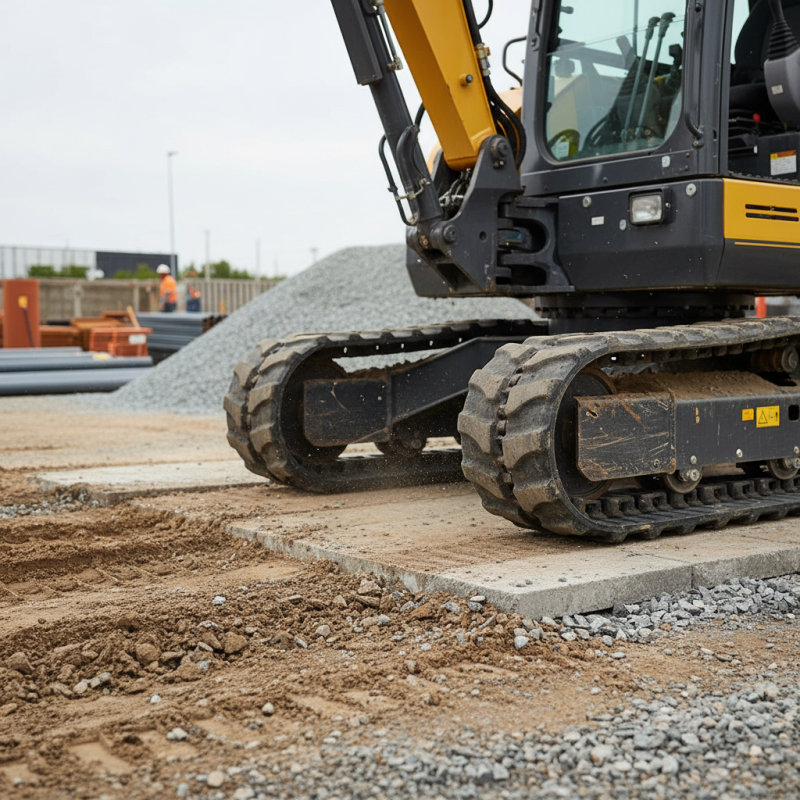
Choosing the right mini excavator tracks can significantly enhance your machinery’s performance. There are mainly rubber and steel tracks. Rubber tracks are lighter and less damaging to delicate surfaces. They provide excellent traction on soft soil. However, they may wear out faster on rough terrains. Steel tracks, on the other hand, offer durability and strength. They are ideal for heavy-duty work. The drawback? They can be cumbersome for smaller jobs and may damage softer ground.
When selecting tracks, consider the environment. If you're working on construction sites with mixed surfaces, perhaps a versatile rubber track might be better. For rocky or uneven terrain, steel tracks could prove advantageous. The weight of your excavator also matters. A heavier machine benefits from sturdier tracks. Lighter models may need less robust options for optimal maneuverability.
Tip: Always assess your work area before making a decision. Observe how different tracks perform in similar conditions. Another tip: consult with operators experienced in various terrains. Their insights can help refine your choice. Remember, the best track isn't always the most robust. Sometimes, it’s about the right fit for your specific needs.
How to Choose the Best Mini Ex Tracks for Your Excavator?
| Track Type |
Material |
Weight Capacity |
Terrain Suitability |
Benefits |
| Rubber Tracks |
Rubber Composite |
Up to 5000 lbs |
Soft and Uneven Surfaces |
Reduced ground pressure, low noise level |
| Steel Tracks |
Steel |
Up to 8000 lbs |
Hard Surfaces and Rough Terrain |
Durability, superior traction |
| Hybrid Tracks |
Rubber and Steel |
Up to 6000 lbs |
Various Terrains |
Versatility, balanced performance |
| Heavy-Duty Tracks |
Reinforced Rubber |
Up to 10000 lbs |
Heavy-Duty Construction Sites |
Maximized weight limit, enhanced durability |
| Paver Tracks |
Rubber |
Up to 4500 lbs |
Flat and Smooth Surfaces |
Minimal ground disturbance, excellent for paving |
Evaluating Track Materials and Durability for Mini Excavators
When selecting mini excavator tracks, the choice of materials and their durability is crucial. Many tracks are made from rubber or steel. Rubber tracks provide good traction and a smoother ride. They are also quieter and less likely to damage existing surfaces. However, rubber can wear out quickly in harsh environments. On the other hand, steel tracks are more durable and can withstand rough terrains. They tend to last longer, but with increased noise and potential surface damage.
Research by the Construction Industry Institute shows that over 40% of operational failures are linked to track issues. This emphasizes the need to choose the right material. Rubber tracks might last around 1,000 hours, while steel tracks can exceed 2,500 hours. Yet, user experience varies based on usage and environment. It’s essential to analyze your specific needs.
Tips: Always examine the tread pattern before making your choice. A deep tread offers better grip on uneven surfaces. Consider your working conditions and make adjustments accordingly. Regular maintenance can greatly extend the life of your chosen tracks. Remember, the best choice often requires a balance between cost, durability, and the job's demands. Reflection on past experiences may illuminate pitfalls to avoid in future purchases.
Evaluation of Mini Excavator Track Materials and Durability
This chart compares the durability ratings of different track materials commonly used for mini excavators. The ratings are based on a scale of 1 to 10, with rubber tracks scoring 7, steel tracks 9, composite tracks 6, and plastic tracks 4. Steel tracks generally offer the highest durability, making them ideal for heavy-duty tasks.