2026 Best Aluminum Profile for Pergola Suppliers?
Choosing the 2026 Best Aluminum Profile for Pergola Suppliers? requires more than comparing catalog prices. A pergola profile must resist sunlight, rain, wind pressure, and repeated assembly. It should also look clean beside stone, timber, or glass. The International Aluminium Institute reported global primary aluminum production at roughly 70 million metric tons in recent years. That scale shows aluminum’s industrial importance, but volume alone proves nothing about supplier quality. Certification, alloy control, and production consistency matter more.
Industry reports from Grand View Research identify construction as a major application area for aluminum extrusion. Their analysis also points to continued demand for lightweight, corrosion-resistant building components. For pergola buyers, this supports aluminum’s practical value. Yet the best Aluminum Profile For Pergola should match the project environment. A coastal installation may need stronger surface treatment, sealed drainage paths, and careful fastener selection. A residential garden may prioritize slim sightlines, concealed channels, and accurate corner connections. Small details matter.
Reliable suppliers should explain alloy grades, wall thickness, temper, coating standards, and test methods. Ask for mill certificates, sample sections, load data, and finish warranties. Request evidence of powder-coating performance, not only attractive photographs. A supplier with extrusion, machining, and quality control in one system can reduce dimensional errors. Still, no ranking stays perfect. Market prices change, certifications expire, and even experienced factories can miss a tolerance. This guide evaluates supplier capability through evidence, application experience, and transparent communication. The cheapest profile may fit today. It may disappoint after one harsh winter.
What Are Aluminum Profiles for Pergolas?
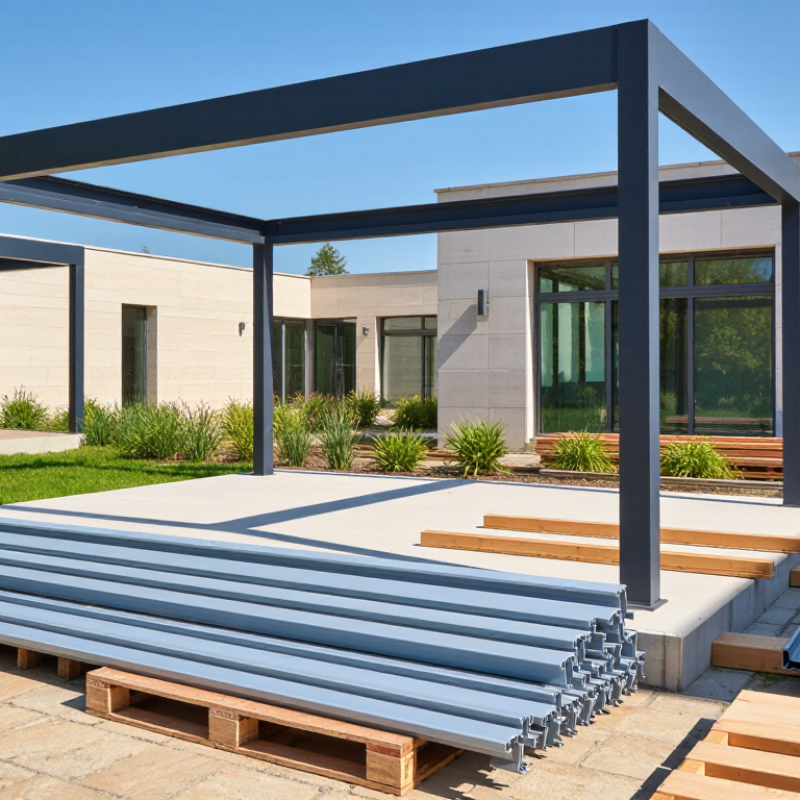
Aluminum profiles for pergolas are engineered extrusions, not simply metal bars. They form the posts, beams, rafters, louvers, gutters, and connection channels. Most use 6063 alloy for clean surfaces and easier extrusion. Load-bearing parts may require 6061 alloy or stronger temper conditions. A reliable profile should match wind load, roof span, drainage needs, and local building requirements.
The distinction matters. A hollow post can reduce weight, but its wall thickness and internal reinforcement control stability. Powder coating improves appearance and corrosion resistance, yet it cannot correct poor drainage or exposed cut edges. The International Aluminium Institute reported global primary aluminum production above 72 million tonnes in 2024. That scale supports supply availability, but it does not guarantee consistent extrusion quality. Grand View Research also projects strong growth in the global aluminum extrusion market through 2030, reflecting wider demand for lightweight construction components.
Supplier selection needs more than a catalog thickness. Ask for alloy certificates, temper details, dimensional tolerances, coating test results, and structural calculations. Check whether corners use mechanical fasteners, hidden plates, or welded joints. A thicker profile is not automatically better. It may add cost and thermal movement. I would also inspect sample joints before approving a large order. Small gaps become visible problems after rain, dust, and repeated seasonal expansion. Data helps, but site conditions still decide the best profile.
What Are Aluminum Profiles for Pergolas?
Aluminum profiles for pergolas are hollow or reinforced extrusions used for columns, beams, rafters, and louvers. The chart shows representative cross-sectional dimensions commonly used in residential pergola systems. Larger profiles generally provide greater stiffness and longer unsupported spans, while the final design must be verified for wind, snow, connection details, and local building requirements.
Representative profile sizes: dimensions are shown in millimeters and refer to the approximate outside width and height of commonly specified pergola extrusion sections.
Which Aluminum Profile Features Matter Most in 2026?
2026 Best Aluminum Profile for Pergola Suppliers?
In 2026, profile selection should begin with load performance, not appearance. A 6063-T5 or T6 architectural alloy offers useful strength and clean extrusion lines. However, alloy grade alone cannot prove durability. Ask for wall thickness, section modulus, deflection limits, and structural calculations for local wind and snow loads. A slim 100 mm beam may look elegant, but it can flex noticeably over a long span.
Coating quality matters outdoors. Specify powder-coating performance tested under recognized AAMA 2604 or AAMA 2605 requirements. Check color retention, chalk resistance, pretreatment, and coating thickness. Salt exposure also deserves attention near coastal projects. Small drainage channels, sealed joints, and concealed fasteners reduce water traps. These details are easy to miss. They often decide maintenance costs.
Sustainability is another practical feature. The International Aluminium Institute reports that recycled aluminum requires about 95% less energy than primary aluminum. Therefore, suppliers should disclose recycled content, production origin, and recycling pathways. A sustainability claim without documentation is weak evidence. I would also request batch certificates, coating test results, and sample profiles before approving a large order. The industry still overvalues polished renderings. Real performance depends on tolerances, connectors, drainage, and installation quality.
What Makes a Supplier Reliable for Pergola Projects?
When choosing an aluminum profile supplier for a 2026 pergola project, reliability starts with evidence, not attractive pictures. A dependable supplier provides alloy data, temper details, profile drawings, and measured tolerances. Ask how each batch is tested and recorded. Check coating thickness, drainage design, connector fit, and resistance to outdoor exposure. Small gaps matter. They can cause rattling, water marks, or difficult installation months later.
Project experience should be visible in practical support. A capable technical team reviews span lengths, roof loads, fastener positions, and local climate conditions. They should offer samples before production and explain changes caused by cutting or joining. Clear drawings help installers avoid improvised drilling. Some suppliers promise short lead times, yet cannot confirm packaging or replacement parts. That weakness often appears when the site is already busy.
Reliable communication is equally important. Confirm response times, inspection stages, packing methods, and warranty terms in writing. Traceable batch numbers make quality concerns easier to investigate. References from comparable pergola projects are useful, but they need careful checking. One honest warning is valuable: no profile suits every span or climate. If a supplier admits limitations and proposes a tested alternative, that signals professional judgment. I would still request a pilot order. It may reveal fit issues that documents miss.
How to Choose the Best Supplier for Your Needs
Choosing the best aluminum profile supplier for a pergola requires more than comparing price lists. Start with alloy, temper, wall thickness, and engineering support. For outdoor structures, ask whether the supplier can provide load calculations for wind, snow, and long spans. Request full material certificates, coating test results, and production traceability.
Technical evidence matters. The U.S. Department of Energy reports that recycling aluminum uses about 95% less energy than producing primary aluminum. Ask suppliers about recycled content and documented sourcing. The International Aluminium Institute also emphasizes recycling’s role in reducing aluminum’s environmental impact. These figures do not prove quality, but they reveal whether a supplier measures sustainability seriously.
The U.S. Department of Energy reports that recycling aluminum uses about 95% less energy than producing primary aluminum. Ask suppliers about recycled content and documented sourcing. The International Aluminium Institute also emphasizes recycling’s role in reducing aluminum’s environmental impact.
Visit the factory or request a live production audit. Check extrusion straightness, corner fit, drainage details, and coating consistency on sample profiles. Ask for references from projects with similar climates. Confirm tooling ownership, minimum order quantities, spare-profile availability, and realistic delivery dates. A written warranty should define coating failure, structural defects, and response times.
No supplier is perfect. I still make one mistake: trusting polished samples too quickly. A better test is a small pilot order, followed by assembly under real site conditions. Compare tolerances, packaging, communication, and corrective action. Suppliers that answer technical questions clearly usually create fewer installation problems later. According to a 2023 industry survey by the Aluminum Extruders Council, labor shortages and delivery reliability remain major concerns for extrusion buyers. That makes responsive after-sales support a practical selection criterion, not a courtesy.


